
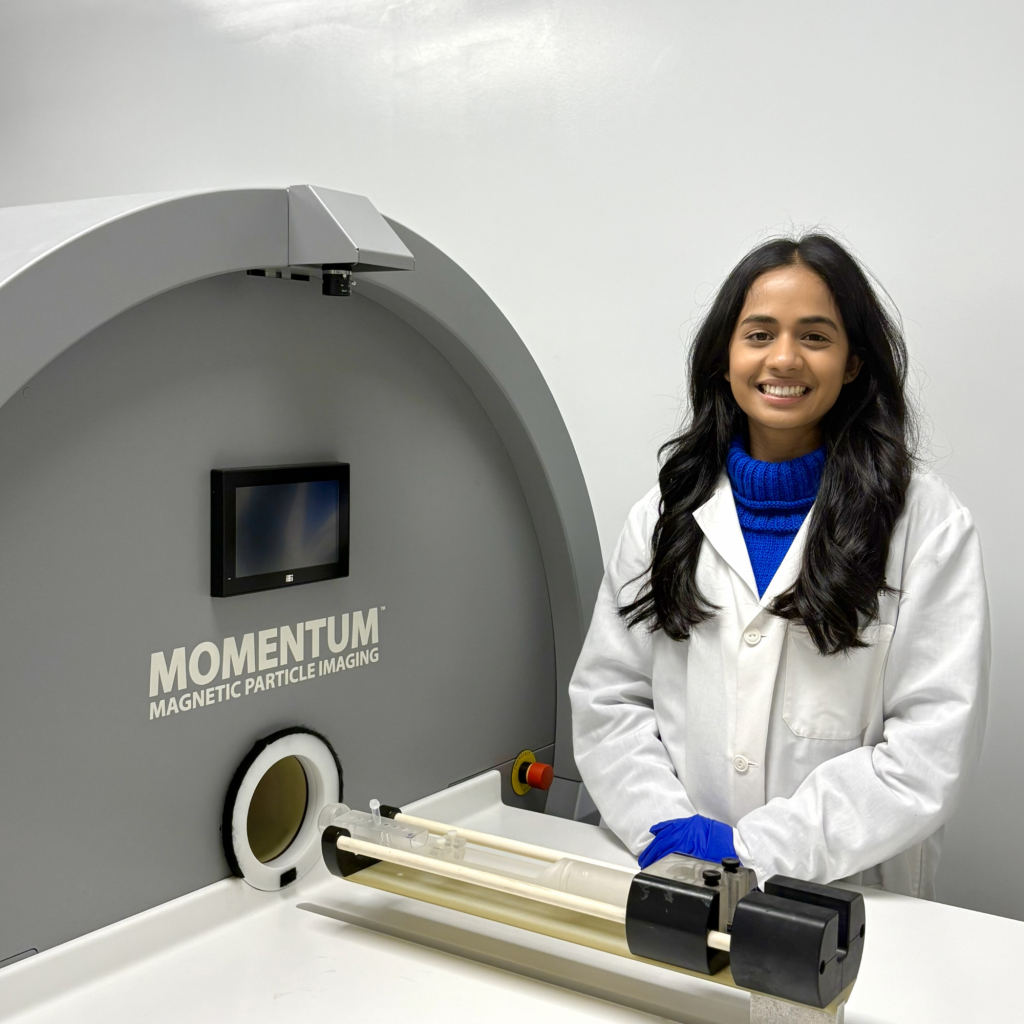
Nitara Fernando is a PhD student in the Department of Medical Biophysics at Western University. She is conducting BCC-funded breast cancer research under the mentorship of Dr. Paula Foster.
- Could you share your motivation/personal connection to breast cancer research?
Cancer has deeply affected my family, with four of my aunts and uncles, as well as my grandfather passing away due to the disease. My family members have fueled my passion for cancer research, specifically through the lens of medical physics. The opportunity to apply my problem-solving skills in physics along with my drive to assist those affected by this life-threatening illness serves as a constant motivation for my research.
- What specific areas of breast cancer research are you currently focusing on, and why are they important?
My research focuses on the detection of breast cancer spread, which happens through a process called metastasis. When breast cancer spreads, it often targets the lymph nodes. To identify and remove cancerous lymph nodes, patients may undergo a sentinel lymph node biopsy, which is a surgical procedure guided by imaging. Currently, this involves injecting a radioactive tracer into or around the tumour, which travels to the affected lymph nodes. In my research, we are working to improve this procedure by utilizing a novel imaging technology called Magnetic Particle Imaging. This technique, combined with specialized magnetic tracers, allows for the accurate detection of cancerous lymph nodes without exposing patients or healthcare workers to radiation.
- How do you see the future of breast cancer prevention, screening, diagnosis, treatment evolving through research?
I see the future of breast cancer prevention, screening, diagnosis, and treatment moving toward increasingly personalized approaches specific to each patient. Given the complexity and heterogeneity of breast cancer, a universal solution is rarely effective. As the field advances, personalized strategies are becoming central to improving outcomes for breast cancer patients.
- In your opinion, what role can public awareness and advocacy play in advancing breast cancer research and treatment?
Public awareness and advocacy play a crucial role in advancing breast cancer research and treatment. Increased awareness encourages earlier screening, reduces stigma, and empowers individuals to recognize symptoms sooner.
- What message would you like to share with someone who has just been diagnosed with breast cancer?
Receiving a breast cancer diagnosis can feel overwhelming, but I would remind them that they are not facing it alone. Their healthcare team, loved ones, and others who have walked a similar path will be there to support them every step of the way. It is okay to ask questions, take time to process information, and move through the journey at their own pace.